
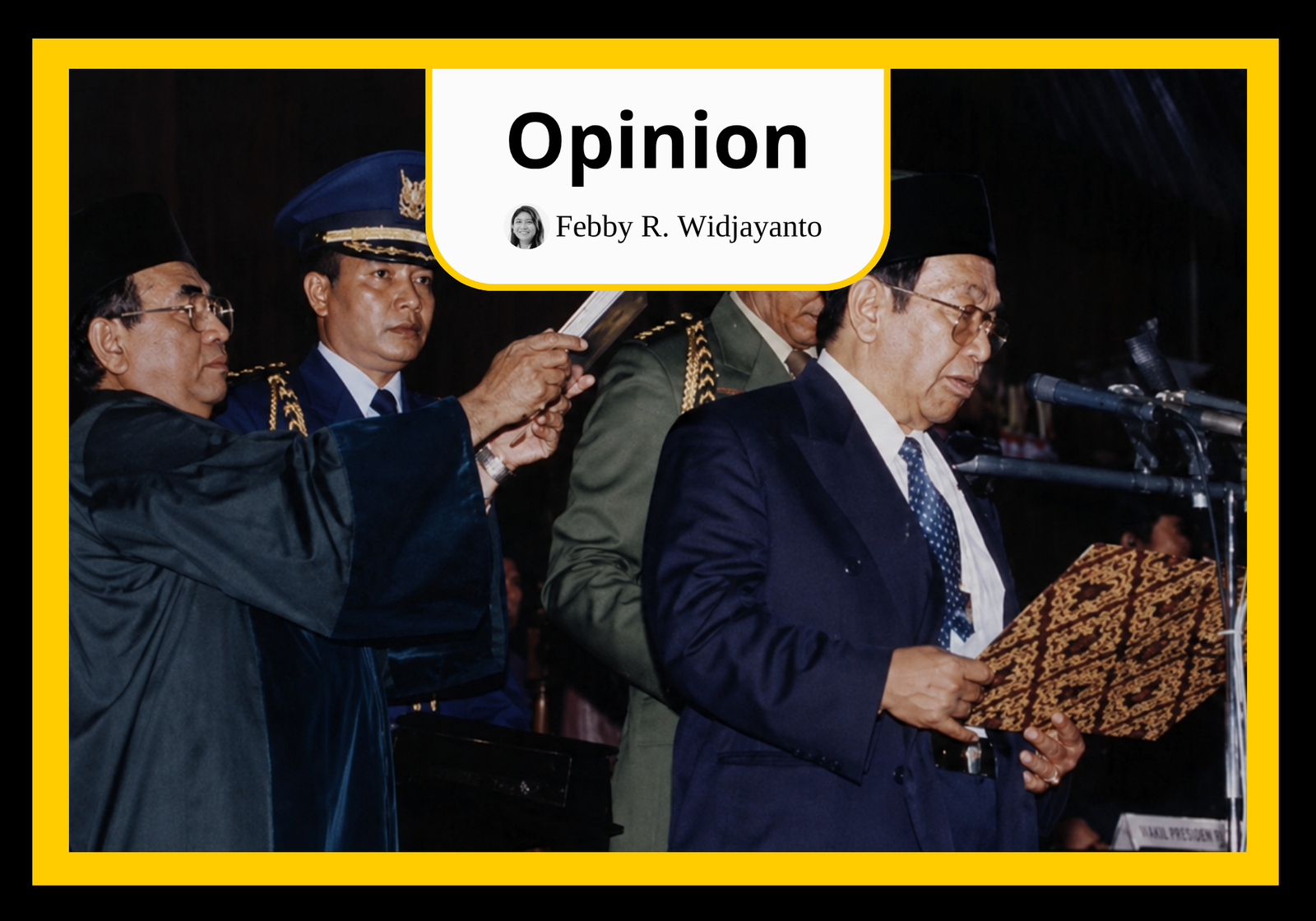
Indonesia’s Reform era (Reformasi) commenced in 1998 with the resignation of President Soeharto, ending more than three decades of authoritarian rule. His resignation followed a week of widespread civil unrest amid the economic turmoil caused by the Asian financial crisis. More than two decades after the Reform era began, Indonesia still struggles with familiar political pathologies: excessive centralisation, uneven development, strained centre-periphery relations, entrenched oligarchic power and weak mechanisms of accountability.
Author: Febby Widjayanto
Faculty member and assistant professor at the Department of Politics, Faculty of Social and Political Sciences, Universitas Airlangga