Countering insurgent attacks in its southern region has always been on the agenda of successive Thai administrations in 1948, as the conflict has historically inflicted severe casualties on civilians and dealt a heavy blow to public resources. Yet, it seems like the counter-measures deployed thus far have merely scratched the surface, chronically overlooking the root causes of the unrest.
The truth is plain for all to see on the night of August 22, when a coordinated wave of more than 70 arson attacks and bombings struck Thailand’s “Deep South” provinces of Narathiwat, Yala, Pattani and Songkhla. Narathiwat was the epicentre of the wave of violence, accounting for over 40 incidents, notably including a roadside bombing in Muang district that injured two women.
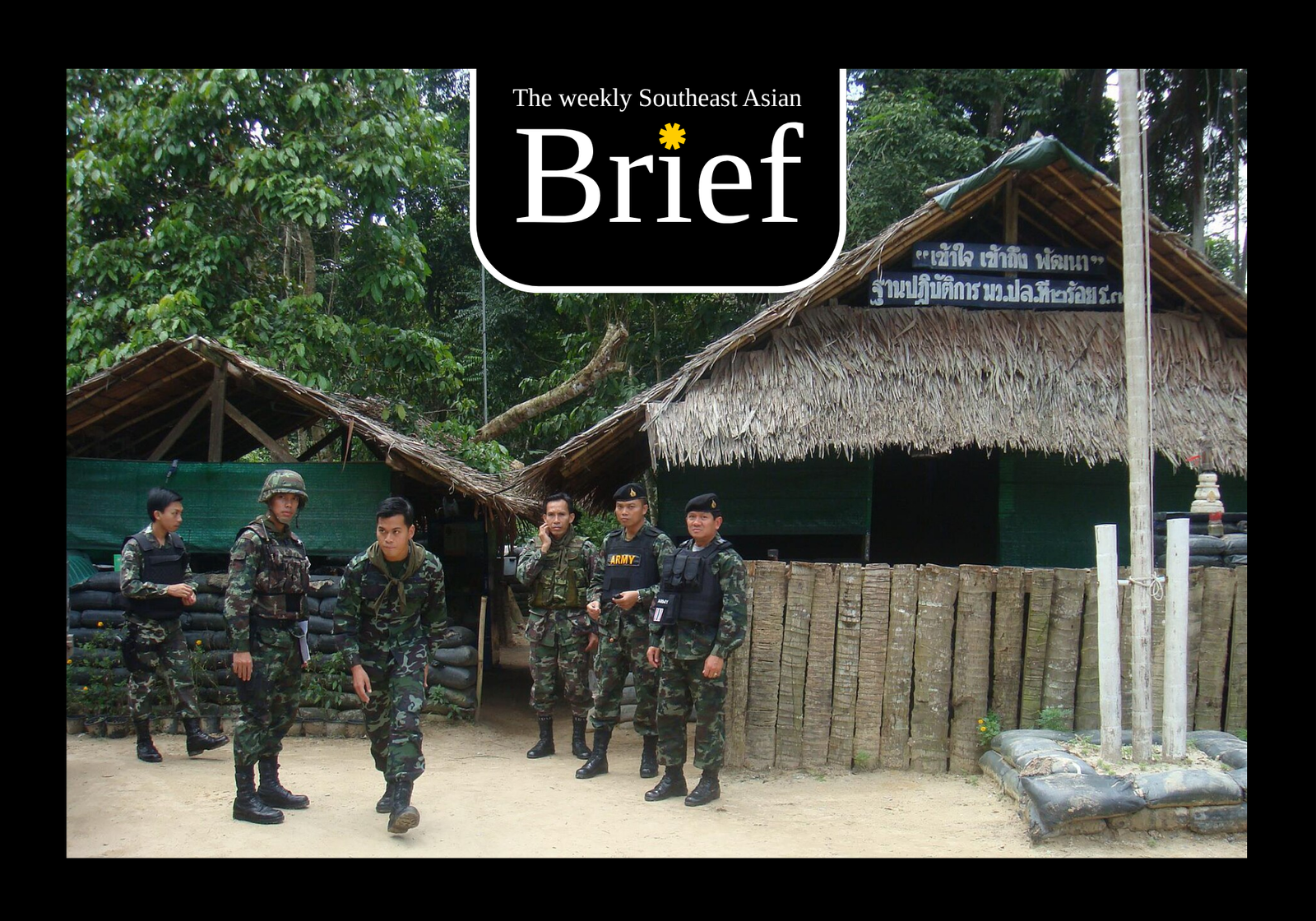
The head of the Thai army in the southern region, Lieutenant General Norathip Poinok, acknowledged weaknesses and shortcomings in both intelligence and local community engagement. He admitted the failure of preventative intervention, even though intelligence had warned of these threats two months prior.
“We could not get specific enough intelligence,” he claimed, adding that the surveillance area is extensive and that the militants “choose whichever weak point they believe they can exploit”. The general further argued that the local civilians are “afraid to cooperate with the authorities for fear of retaliation from the insurgents”.
With prevention no longer an option, remedial actions were initiated. Thai authorities instantly enforced emergency protocols to “maximise public protection”, leveraging the pre-authorised martial law powers enacted the previous month. Those emergency powers followed a deadly insurgent strike on a security checkpoint in Narathiwat’s Ra-ngae district on July 22, which killed five paramilitary rangers and wounded six civilians. The newest round of defensive measures involved heightened operational alerts alongside an overnight curfew for all districts in Narathiwat. On the subsequent day, Thai Prime Minister Anutin Charnvirakul called an urgent meeting with high-level security officials.
An analysis of the physical footprints unveiled a calculated modus operandi across the four provinces. The assailants were targeting local government offices, telecommunication towers and other commercial infrastructure and public facilities. Such large-scale tactical patterns, conflict analysts noted, indicate that the militants are seeking to signal frustration and, accordingly, reiterate their political demands, rather than merely “showing presence”. It was a direct challenge to the Thai government’s authority.
Military officials believe the attacks are direct retaliation from militant factions following state crackdowns in early August on illicit contraband networks that are circumstantially evident to have funded the insurgent movement in Thailand’s southern region. For context, the Southeast Asia mainland (namely Myanmar, Thailand, Cambodia and Laos) is notoriously titled as the “ground zero” for the global scamming industry. These transnational illicit businesses, which originated as early as their independence eras, have thrived and grown significantly sophisticated with the facilitation of technology, ultimately crippling economic growth for these states.
The succeeding evaluation factor to evaluate is the timing, which carries immense political weight as Thai authorities are slated to revive “peace talks” with their primary separatist militant group, the Barisan Revolusi Nasional (BRN), in late October. Of note, the negotiations were initially set to commence in early September but were subsequently postponed following the late-July insurgent strike, with the government staunchly demanding that the militants explain the outbreak of violence.
In truth, no groups have claimed responsibility for the attacks. And indeed it remains too early to draw definitive conclusions. However, alongside the timing factors, analysts noted that the style of the coordinated assault heavily mirrors previous operations orchestrated by the BRN.
To view this in retrospect, unrest in Thailand’s southernmost provinces originated when colonialisation drew artificial borders through the 1909 Anglo-Siamese Treaty. This accord separated modern-day Thailand and Malaysia by permanently dismantling the sovereign the Islamic Kingdom of Patani.
Since then, Bangkok has orchestrated aggressive assimilation measures to systematically dismantle the local Malay-Muslim identity, known broadly as “Thaification”. It involved administrative manipulation, strict control over Islamic education, as well as systemic economic and legal neglect, consequently resulting in a pervasive atmosphere of resentment and alienation.
Inevitably, resistance movements were born, notably the BRN in 1963, which has prompted low-level conflicts ever since. In line with the traits of insurgent forces, the group sustained itself exploiting regional black markets and tapping directly into transnational illicit networks. The BRN became substantially more sophisticated, and accordingly, more threatening in the early 21st century. Clashes between the insurgent group and the Thai military since 2004 have resulted in the deaths of nearly 8,000 people.
Historically, the BRN stipulated total secession for the Patani region. Yet, it has signalled a shift towards devolution in recent peace talk efforts (which initially launched in 2013 with Malaysia serving as the official facilitator). This translates to a demand to legally govern themselves with meaningful autonomy.
The recent outbreak indicates that militants seek strategic leverage ahead of the long-stalled peace talks scheduled for October. With international eyes focused intensely on the Thai government, should the Kingdom fail to display genuine political sincerity in its response, peace-building efforts are highly likely to remain stalled, leaving the conflict to linger indefinitely.
About The Author