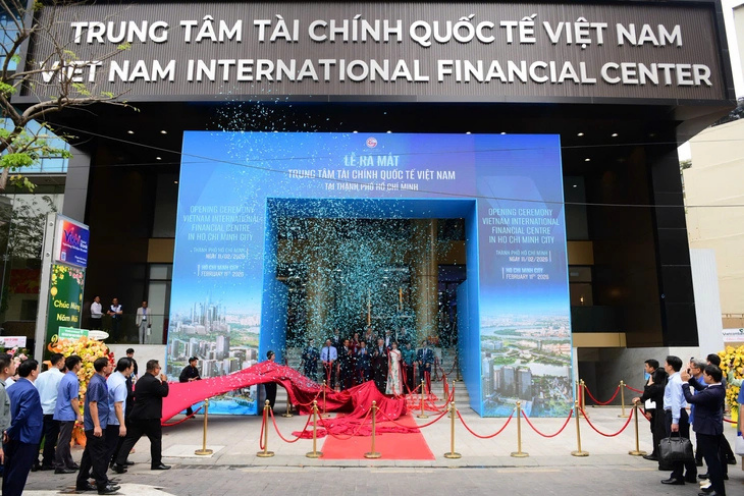
The launch ceremony of the Vietnam International Financial Centre (VIFC) in Ho Chi Minh City, February 11, 2026. (QUANG DINH via Vietnam News)
On May 16, the Ho Chi Minh City Business Association (HUBA) convened key stakeholders, economic experts, local businesses and investors for a forum themed “Vietnam International Financial Centre (VIFC) in Ho Chi Minh City – Opportunities for Businesses”. HUBA Chairman Nguyễn Ngọc Hòa highlighted that the event marked the dawn of a new era, emphasising that businesses must actively embrace science, technology, innovation and digital transformation.
The forum served as a strategic follow-up to the official establishment of the financial centre back in February 2026.
In particular, the VIFC is expected to propel the development of Vietnam’s specialised industries and nurture fresh growth momentum, most notably within maritime finance.
During the forum, Nguyễn Hữu Huân, Vice Chairman of the VIFC Executive Board, outlined that the centre will seamlessly integrate finance, technology and trade into a unified system operating under international standards. This will be achieved by strategically leveraging the region’s major maritime routes.
A key development to watch is the rollout of the “port-to-finance” model, where the VIFC will function as the foundational financial infrastructure supporting regional transhipment hubs. Moving away from traditional shipping frameworks, this tech-driven model will standardise data from cargo flows, transport contracts and electronic bills of lading, converting them into lucrative trade finance and maritime insurance products.
What does this mean for business?
As Vietnam aims to sustain an average GDP growth rate exceeding 10% during the 2026–2030 period, analysts observed that the VIFC presents a “golden opportunity” for enterprises to participate in large-scale infrastructure, logistics, port development and financial service projects.
Crucially, this integrated “port-to-finance” infrastructure aligns with the broader blue economy, opening direct pathways for green and maritime investors to utilise specialised instruments like blue bonds to fund sustainable ocean projects, coastal infrastructure as well as eco-friendly port technologies.
About The Author