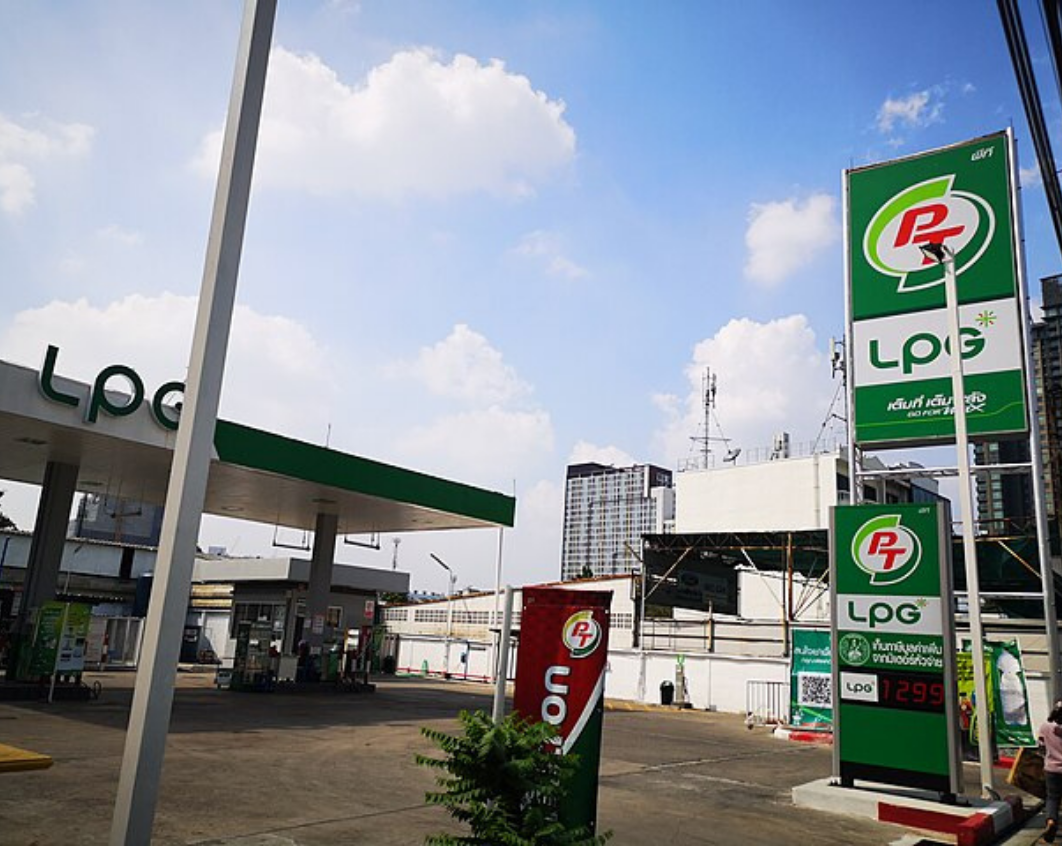
A near view of PT gas station (Wikimedia)
Thailand’s oil reserves were sufficient to cover domestic demand for 109 days as of April 9, according to the Ministry of Energy. The reserves consist of 25 days of legally required strategic stock, 22 days of commercial reserves, 31 days of crude currently in transit and another 31 days already secured for delivery.
Diesel supply, the country’s primary fuel for transportation and economic activity also remained above consumption levels. As of April 7, Thailand produced 83.37 million litres of diesel per day, while daily consumption stood at 68.69 million litres. In the domestic retail market, data from the state-owned oil company PTT Plc showed that B7 diesel was priced at 48.40 (USD 1.54) baht per litre. E20 petrol sold at 38.95 Thai baht (1.24 US dollar) baht per litre, while gasohol 95 was priced at 43.95 Thai baht (1.40 US dollar) per litre.
The update on fuel supplies comes as the government continues to monitor potential impacts from tensions in the Middle East. Earlier, on April 6, Prime Minister Anutin Charnvirakul called on the public to conserve energy, including through work-from-home arrangements, noting that Thailand remained exposed to the crisis because of its reliance on imported oil and gas.
Amid these concerns, the Ministry of Commerce announced plans to tighten crude palm oil exports and regulate bottled palm oil prices to safeguard domestic supplies as demand for biodiesel increases. Thailand continues to rely heavily on crude imports from the Middle East, which account for about 52% of total imports. Domestic oil prices are therefore closely linked to movements in Asian benchmarks, particularly Dubai crude, which has recently diverged from Western benchmarks such as West Texas Intermediate crude oil and Brent crude oil.
Despite maintaining oil reserves sufficient to meet domestic demand for more than three months, the country remains exposed to external price fluctuations due to its reliance on crude imports from the region, prompting authorities to implement more precautionary measures across the energy and commodity sectors.
What does this mean for business?
Thailand’s oil reserves provide short-term supply stability, reducing the immediate risk of fuel shortages for transport, logistics and manufacturing sectors. However, businesses remain exposed to global price volatility as domestic fuel prices are closely linked to international crude markets, particularly Middle East imports.
Any further rise in global oil prices could increase operating costs, especially for fuel-intensive industries. Tighter controls on crude palm oil exports may also affect biodiesel producers and commodity traders as the government prioritises domestic supply.
About The Author