
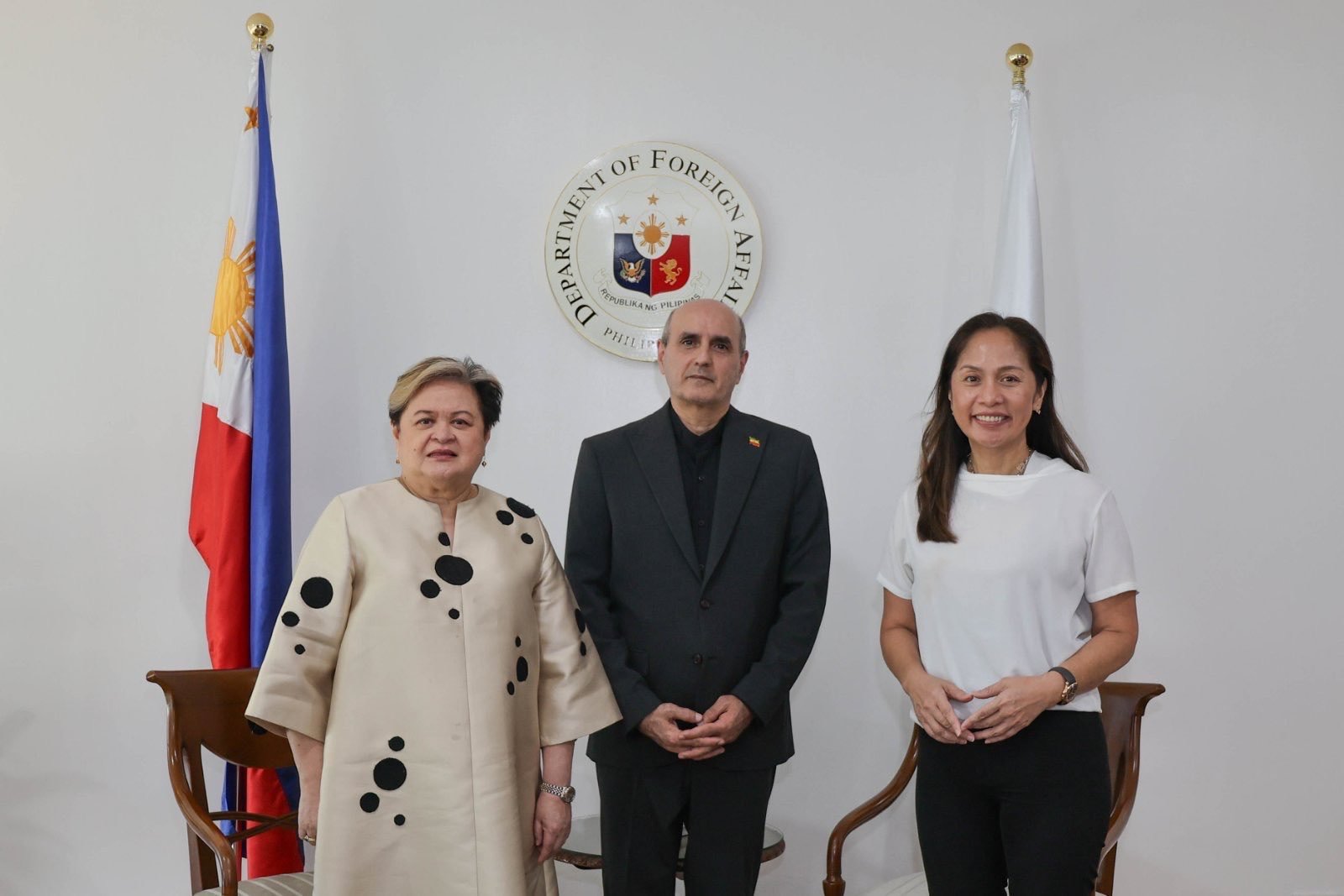
Philippine Foreign Affairs Undersecretary Teresa Lazaro meets Iranian Ambassador Yousef Esmaeilzadeh, joined by Energy Secretary Sharon Garin, to advance bilateral cooperation, particularly in energy.” (X/Teresa Lazaro)
On April 1, the Philippine Secretary of Foreign Affairs Teresa Lazaro, along with Secretary of the Department of Energy (DOE) Sharon S. Garin, convened a meeting with the Iranian Ambassador Yousef Esmaeilzadeh to discuss the country’s energy lifelines.
Manila requested that Tehran classify the Philippines as a ‘non-hostile’ country to allow its oil transport to pass through Strait of Hormuz. Secretary Lazaro also emphasised the safety of its seafarers and secure energy supplies from the Middle East.
The Undersecretary of the Presidential Communications Office of the Philippines, Claire Castro confirmed: “Sec. Lazaro requested that Iran formally designate [the Philippines] as a ‘non-hostile country’ and ensure safe passage for Philippine-flagged vessels and oil shipments. This is vital for the protection of our seafarers and our energy supply.” Manila also met Iranian Foreign Minister Abbas Araghchi on April 2 to secure its interests.
As a result of the request and dialogue, Iran has permitted the Philippines’ flagged ship to pass the Strait of Hormuz and ensured that the fuel transport and seafarers will be granted a safe passage.
The Philippines’ heavy reliance on imported oil, with 98% of its petroleum sourced from the Middle East, has been hit hard by Strait of Hormuz closure. Fuel shortage left only a 45-day supply, prompting President Marcos Jr. to declare the National Energy Emergency on March 24 through Executive Order No. 110, making the Philippines the first country in the world to adopt this measure.
Consequently, the Philippines introduced conservation measures, such as establishing four-day work weeks for employees to decrease fuel consumption, providing 3 billion pesos of subsidies, extending public transportation hours and seeking alternative sources.
Despite these steps, shortages persist, leading to social unrest, such as a two-day workers’ strike in March underscoring the urgency of securing safe passage and diversifying energy sources.
About The Author

One thought on “Philippines seeks Iran’s assurance for energy security amid Hormuz blockade”