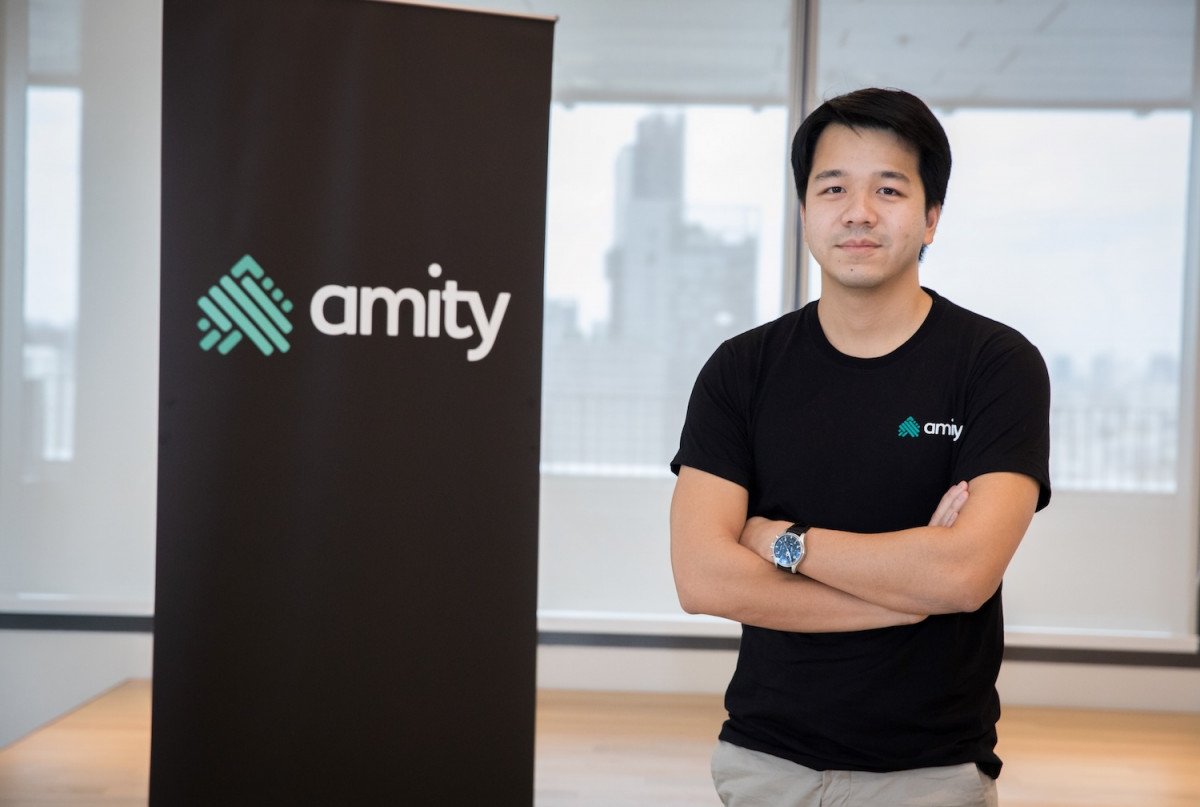
Amity CEO Korawad Chearavanont highlights AI chatbots as tools for businesses to resolve customer issues and employee queries. (Bangkok Post)
Southeast Asia’s largest generative AI company, Amity Group, has spread its wings to the Southeast Asian market when it announced a Series D funding round on March 25. This funding of US$100 million is intended to accelerate growth before an IPO or acquisition take place.
Headquartered in Bangkok, Amity is headed by Korawad Chearavanont, the son of Suphachai Chearavanont, who is the CEO of Charoen Pokphand Group.
This funding allocation marks the largest Generative AI-focused capital raise in Southeast Asia by far, positioning Thailand as a serious player the AI ecosystem business across the region.
Amity utilises vertical AI models, the company will be able to gain high accuracy for developing significant data and analysis. Furthermore, this model reduce potential risk due to its high predictability. This model is widely used across several key industries which requires specific expertise to address their challenges. Equipped with the ability to solve complex problems and integrate workflows, this model is reliable to process decision-making and deliver profitability, specifically on the Return on Investment (ROI).
What does this mean for businesses?
This scale of investment reflects that the mega-scale AI investment means that ASEAN’s AI ecosystem is maturing. Amity’s operations in Bangkok shows that major funding can flow outside Singapore, the country that was always thought to be sophisticated.
The company’s plan to acquiesce €250 million (US$286 million) in revenue and €50 million (US$57 million) EBITDA reflects ‘3B: Build, Buy, Bridge’ strategy in order to integrate AI to the existing business operations among industries across Southeast Asia.
Furthermore, this regional startups can attract global-scale research and development investment. Through the establishment of an AI Research & Application Center (ARAC) in Singapore, Amity can trigger the drive digital transformation and automation across the region. However, this may have a profound downside, as the talent concentration in Singapore, other countries will not be affected.
About The Author