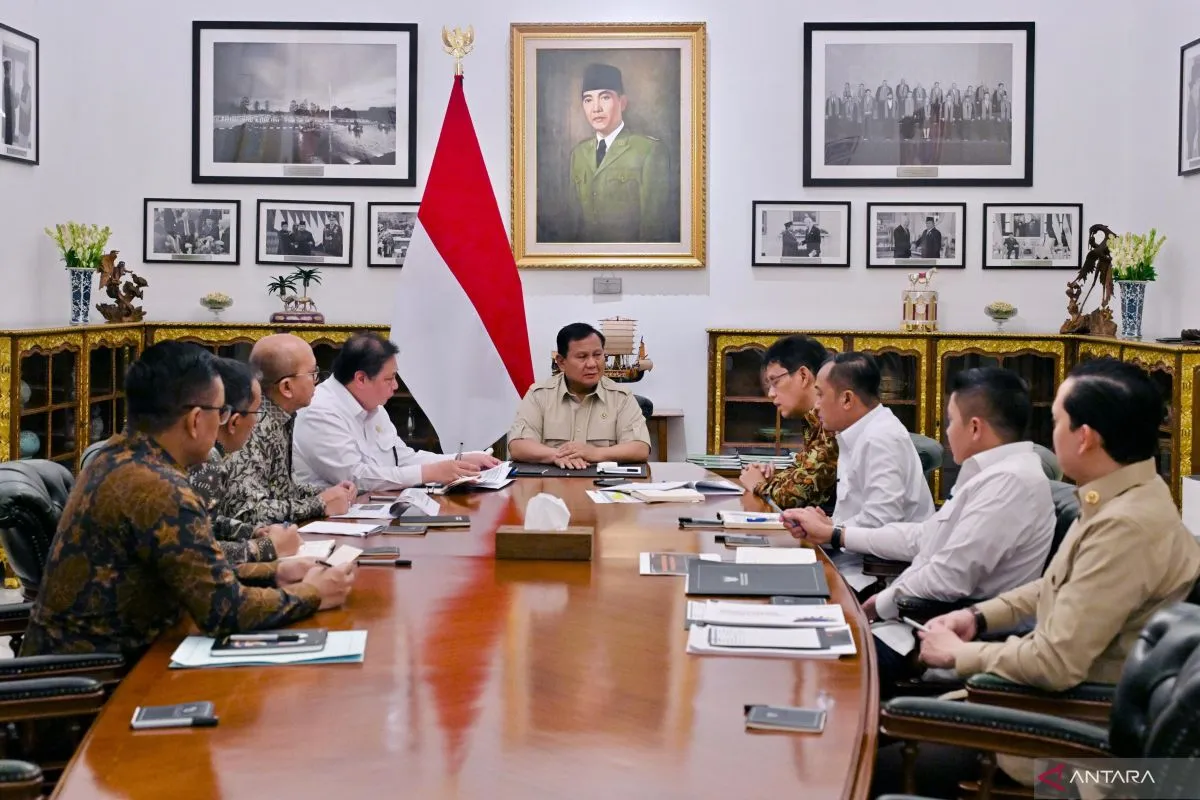
President Prabowo Subianto held a closed meeting at the Presidential Palace in Jakarta on Thursday (March 19, 2026) to discuss energy efficiency amid potential oil supply risks from the Middle East conflict (ANTARA/HO-BPMI Presidential Secretariat/rst)
On March 19, Indonesian President President Prabowo Subianto has instructed key ministries to coordinate policies that ensure energy security while minimising any negative impact on economic activity. Jakarta is preparing a set of energy-saving measures aimed at preserving economic stability amid potential disruptions to global oil supply caused by geopolitical tensions in the Middle East. The strategy reflects a cautious and preventive approach to managing external risks, particularly rising energy prices and supply volatility.
Among the proposals is the introduction of a one-day-per-week work-from-home (WFH) arrangement to reduce fuel consumption linked to commuting. The scheme is expected to apply not only to civil servants but potentially to private sector employees and regional governments, although the technical framework is still under development. Authorities have stressed the importance of targeted implementation to ensure that productivity levels are maintained while energy use is reduced.
More broadly, the government aims to balance energy conservation with continued economic growth. By focusing on efficiency measures rather than restrictive policies, Indonesia seeks to safeguard economic stability and minimise disruptions to business activity.
What does this mean for businesses?
For businesses, the proposed measures indicate a shift towards adaptive, short-term energy management rather than sweeping regulatory changes. While reduced commuting may lower operational costs for some firms, the benefits are likely to be uneven across sectors, with limited relevance for industries dependent on on-site activities.
For Indonesia, the initiative signals a pragmatic response to external energy risks, but also highlights structural constraints. Without deeper reforms in energy infrastructure, diversification, and long-term supply planning, such measures may offer only limited protection against sustained global shocks.
About The Author