
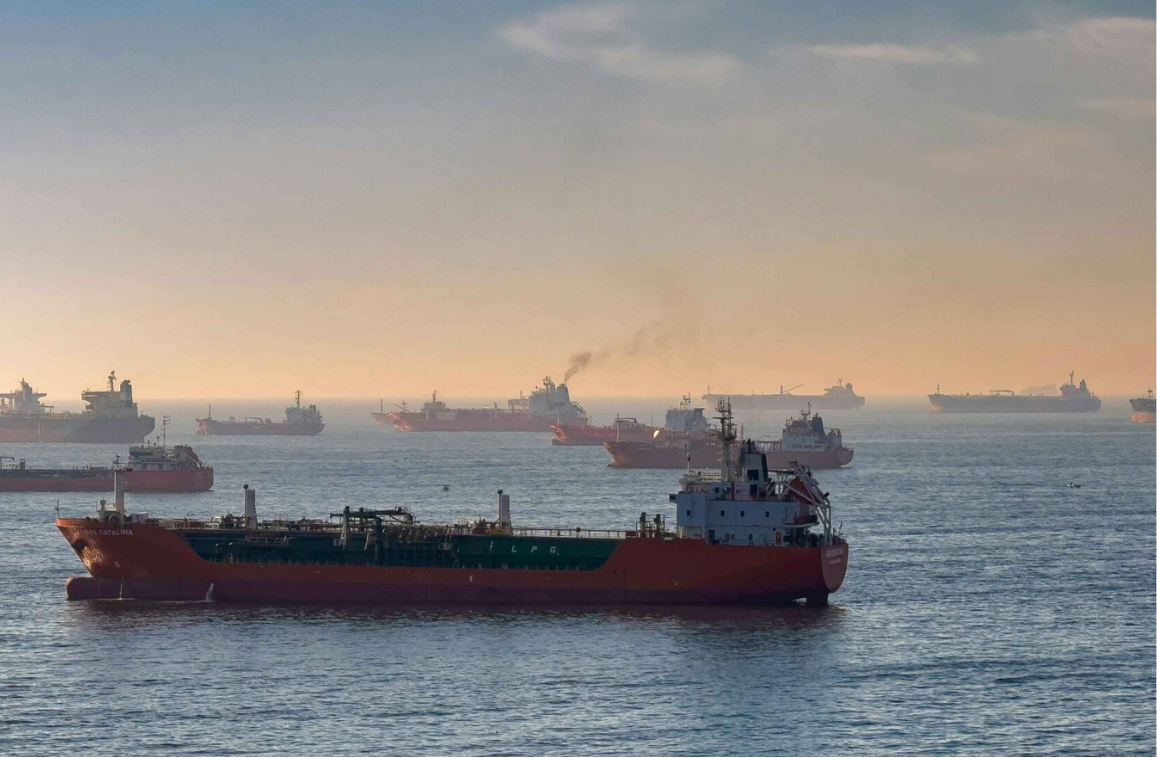
Commercial vessels and fuel tankers navigate the busy waters of the Strait of Hormuz, a crucial artery for global energy supplies. (AFP)
Following rising tension between US-Israel and Iran that started on February 28, fuel prices and demand in Southeast Asia have surged. One major factor was the blockade of Hormuz Strait which disrupted the global energy supply-chain through which 13 million barrels of oil per day are transported. There are rising concerns over liquefied petroleum gas (LPG) and gasoline rarity.
To anticipate further consequences, some Southeast Asian governments have introduced different measures. Myanmar restricts the use of personal cars as gasoline and diesel are two sources of energy in the country. Thailand also expanded its imports from West African nations and the US to address oil products shortages. Singapore has issued a warning for industries and businesses over rising prices. Similarly, the Philippines government restricted unnecessary travel to cut fuel use.
About The Author

One thought on “Southeast Asian states respond to Middle East crisis-driven fuel pressures”