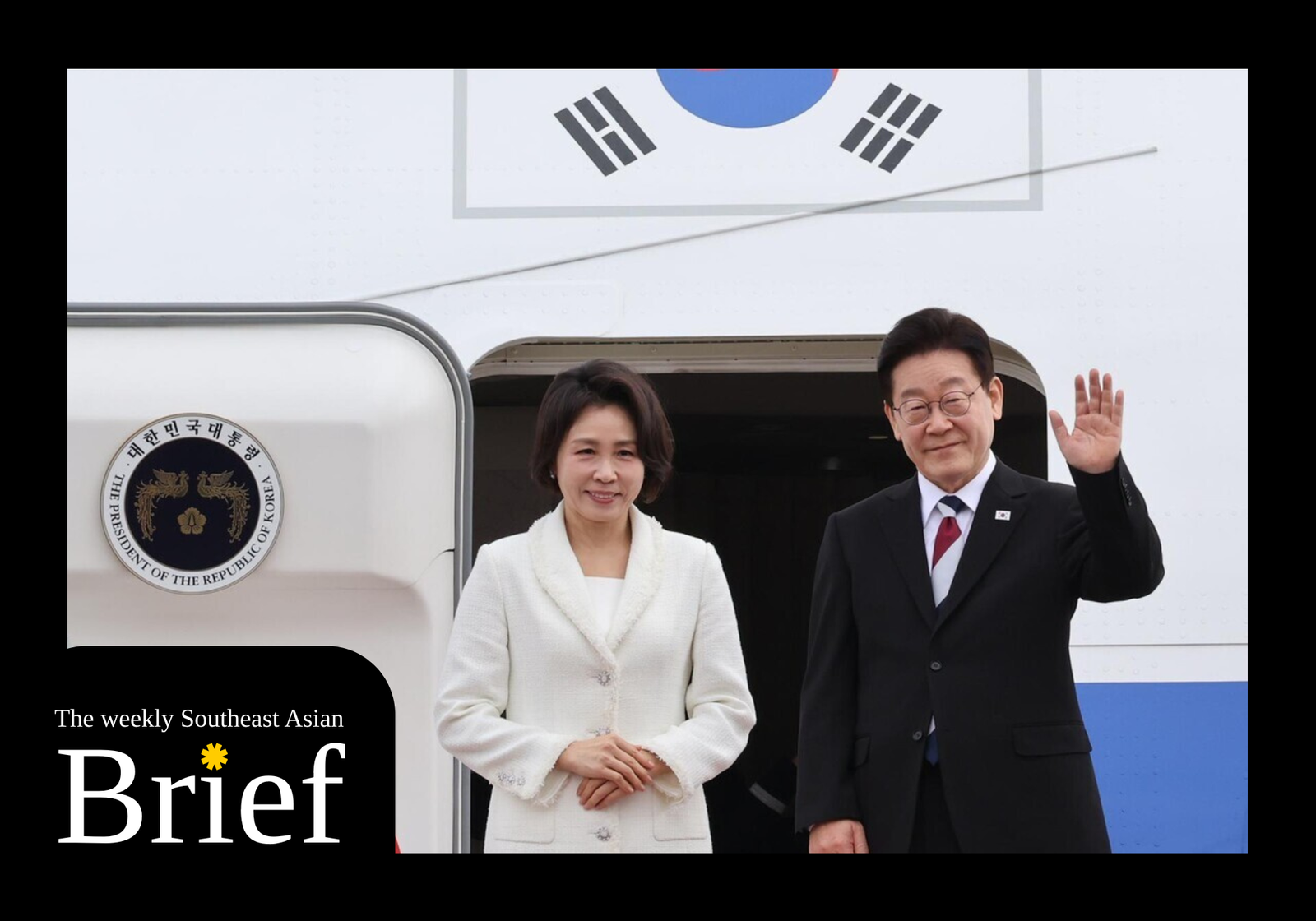
South Korean President Lee Jae Myung and first lady Kim Hea Kyung wave goodbye as they depart through Seoul Airport in Seongnam, Gyeonggi Province, on the 1st for state visits to Singapore and the Philippines. (News 1)
South Korean President Lee Jae-myung’s early March diplomatic tour to Southeast Asia included visits to Singapore and the Philippines, signaling South Korea’s strategic push to deepen engagement with countries in the region.
On March 2, President Lee visited Prime Minister Lawrence Wong in Singapore to announce plans to upgrade the Korea–Singapore Free Trade Agreement, which has been in force for 20 years. The proposed upgrade emphasises digital trade, supply chain resilience, and the green economy, reflecting shifting global economic priorities. Both leaders also witnessed the signing of several MOUs covering areas such as energy, technology, and economic cooperation.
In the Philippines, President Lee held a bilateral summit on March 3 with President Ferdinand “Bong Bong” Marcos Jr. The discussion focused on critical minerals, nuclear energy, and technological collaboration, leading to agreements across sectors including artificial intelligence, cybersecurity, defence, and agriculture. Manila’s large reserves of nickel and cobalt make it a strategic partner for Seoul in securing supply chains for semiconductors, batteries, and other advanced manufacturing industries.
For South Korea, the dual visits serve multiple strategic purposes. Economically, they strengthen trade and investment links while securing alternative sources of critical resources, reducing reliance on China. Diplomatically, the tour positions Seoul as an active middle power in the Indo-Pacific, enhancing its influence with likeminded partners in the region as both Singapore and Manila maintain close relations with the US.
For Singapore and the Philippines, engagement with South Korea provides economic and strategic advantages. Singapore benefits from enhanced market access and collaboration in emerging sectors, while the Philippines gains investment, technology transfer, and industrial development. More broadly, both countries can diversify their external partnerships, hedging against intensifying U.S–China rivalry and strengthening their strategic autonomy in the region.
About The Author