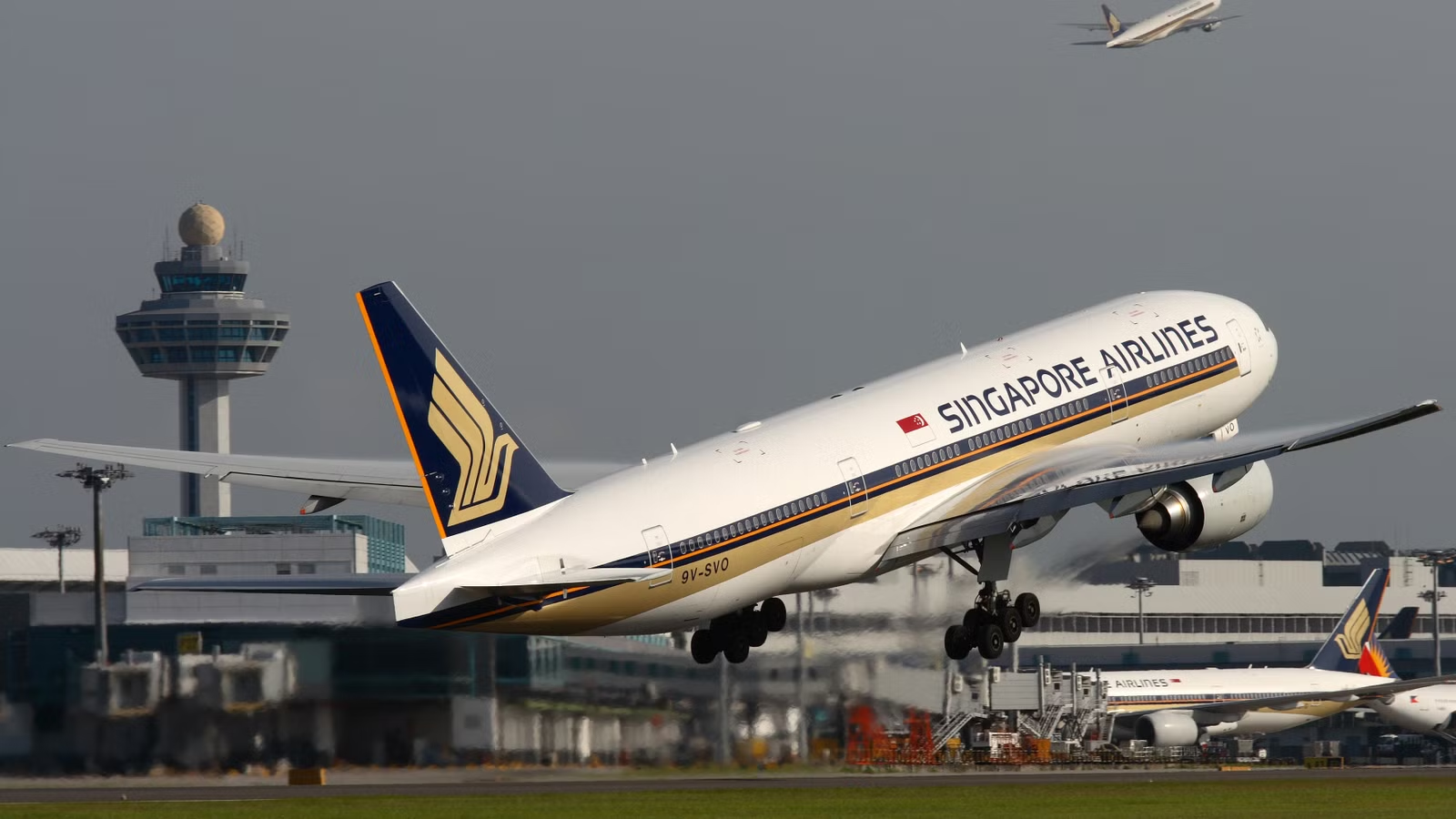
A Singapore Airlines aircraft lifts off from Singapore International Changi Airport. (Simple Flying)
Singaporean authorities announced that they would postpone the imposition of the Sustainable Aviation Fuel (SAF) levy on March 25. The SAF levy, which is originally scheduled to take effect for airline purchasers and other companies from April 1 and on, has been temporarily halted due to the tension in the Middle East by the Civil Aviation Authority of Singapore (CAAS). The levy is now set to begin to be applied to tickets sold from October 1 for flights that embark on January 1, 2027.
The decision, which was first outlined in September 2025, intends to reach the net-zero target emissions by 2050. CAAS stated that the levy applies ‘for all Origin-Destination passengers, Origin-Destination cargo shipments, and general and business aviation flights departing Singapore’.
For passengers travelling on commercial planes, the charge of the retribution varies depending on the geographical region and the class. The price varies from S$1 (US$0.78) to S$41.6 (US$32.37). As for cargo shipments, the levy is calculated based on the per-kilogramme basis. A charge is also applied for the aircraft and the destination itself.
SAF was an agenda that was bred from the Civil Aviation Authority of Singapore (Amendment) Bill in September 2025. The Bill No. 10/2025 aims to accelerate the renewable energy transition process, reduce aviation emissions, with a 1% target in 2026 and endeavour to rise to 3-5% by 2030.
The ongoing conflict in the Middle East, which involves Iran and the US-Israel alliance, has spurred soaring airfare tickets globally. Furthermore, air travel is highly impacted due to the travel restrictions caused by the scarcity of the Jet-A fuel. Airlines companies also witness higher operational costs due to an extra effort to avoid the Middle Eastern restricted airspace. These major impact has triggered Singapore to delay the levy in order to give more space and efforts to the aviation sector to avoid weightier burden during a period of economic uncertainty.
About The Author