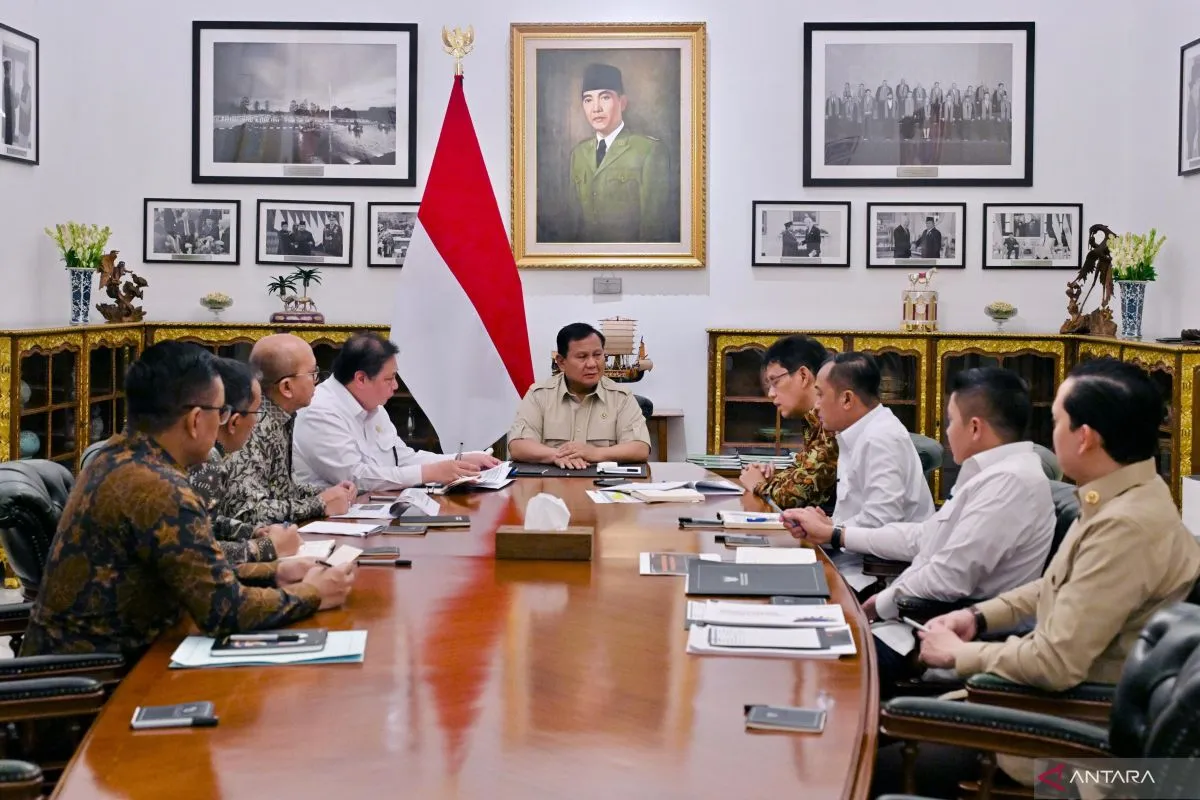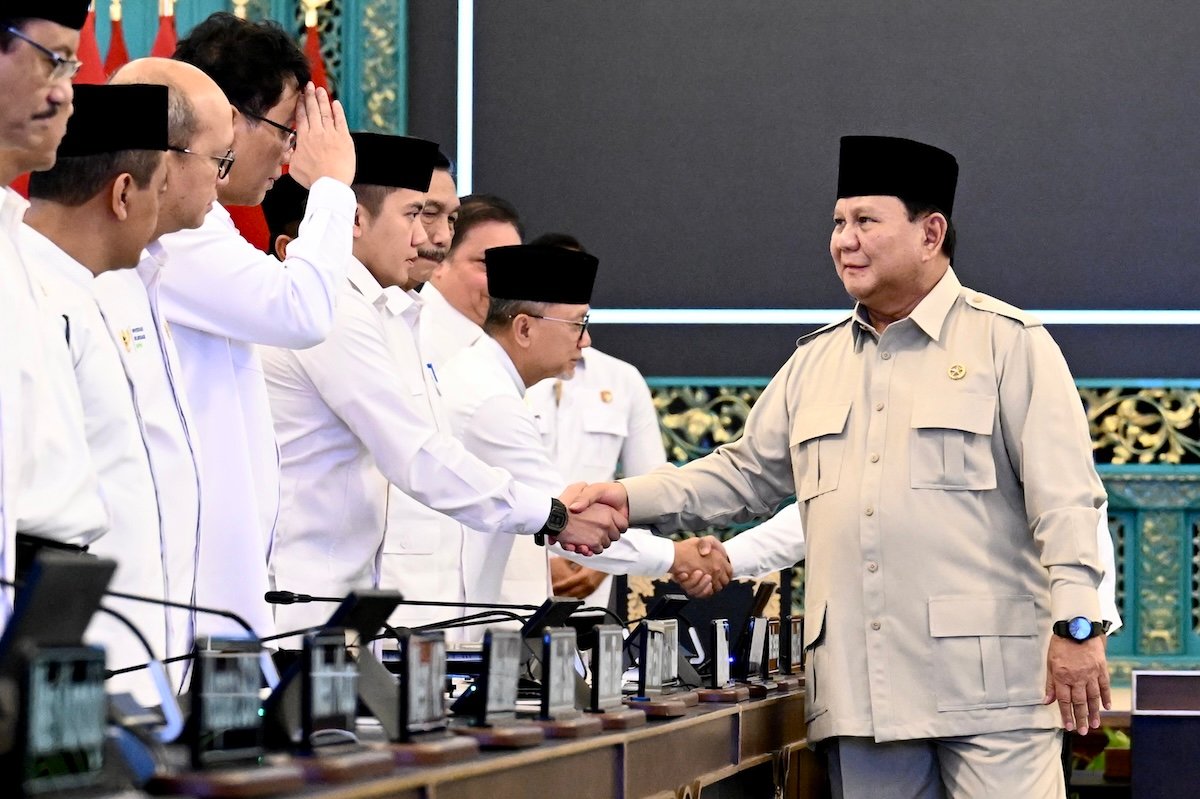
President Prabowo Subianto leads a plenary cabinet meeting at the State Palace in Jakarta on March 13, discussing government priorities. (BPMI Setpres)
During the Plenary Cabinet Session on March 13, President Prabowo Subianto slammed observers who “dislike seeing the government’s achievements” and expressed willingness to regulate their criticism. This controversial statement came in response to a report by Purbaya Yudhi Sadewa, the Finance Minister, on the state of the economy that became subject of criticisms for several observers. Purbaya reminded Prabowo not to be influenced by the baseless analysis.
As a response, Prabowo answered by labelling the analyst as having a “narrow attitude, not a patriotic attitude, as they felt defeated and powerless”. He further claimed to have access to intelligence data and had identified the names of observers and knew who financed them, adding that they would be regulated in due time. Prabowo suspected that this certain group of observers intended to ’cause public anxiety’.
The President also repeatedly expressed his confusion over their stance. He emphasised that “we [Indonesians] are one nation, on the same ship. If the ship tilts, they [observers] will also tilt”. The president himself manifested an ambivalent stance on the political process. He acknowledged the power struggle every five years in the ballot box but insisted that the competition is over and that national solidarity must prevail. “We need to save our ship, which is the Republic of Indonesia that is navigating through dangerous seas filled with reefs,” said the President.
This statement drew reactions from multiple parties, with some warning that it may be a pretext for silencing critics. As the head of the Indonesian Legal Aid Foundation (YLBHI) said, this attitude demonstrates resistance against public feedback. He saw that Prabowo’s wide speculation may have negative impacts on the democratisation process ahead.
During his reign, Prabowo often refused to acknowledge public criticism and sometimes labelled them as driven by foreign interests. For example, in August 2025, he described the massive protests as an attempt at treason.
About The Author