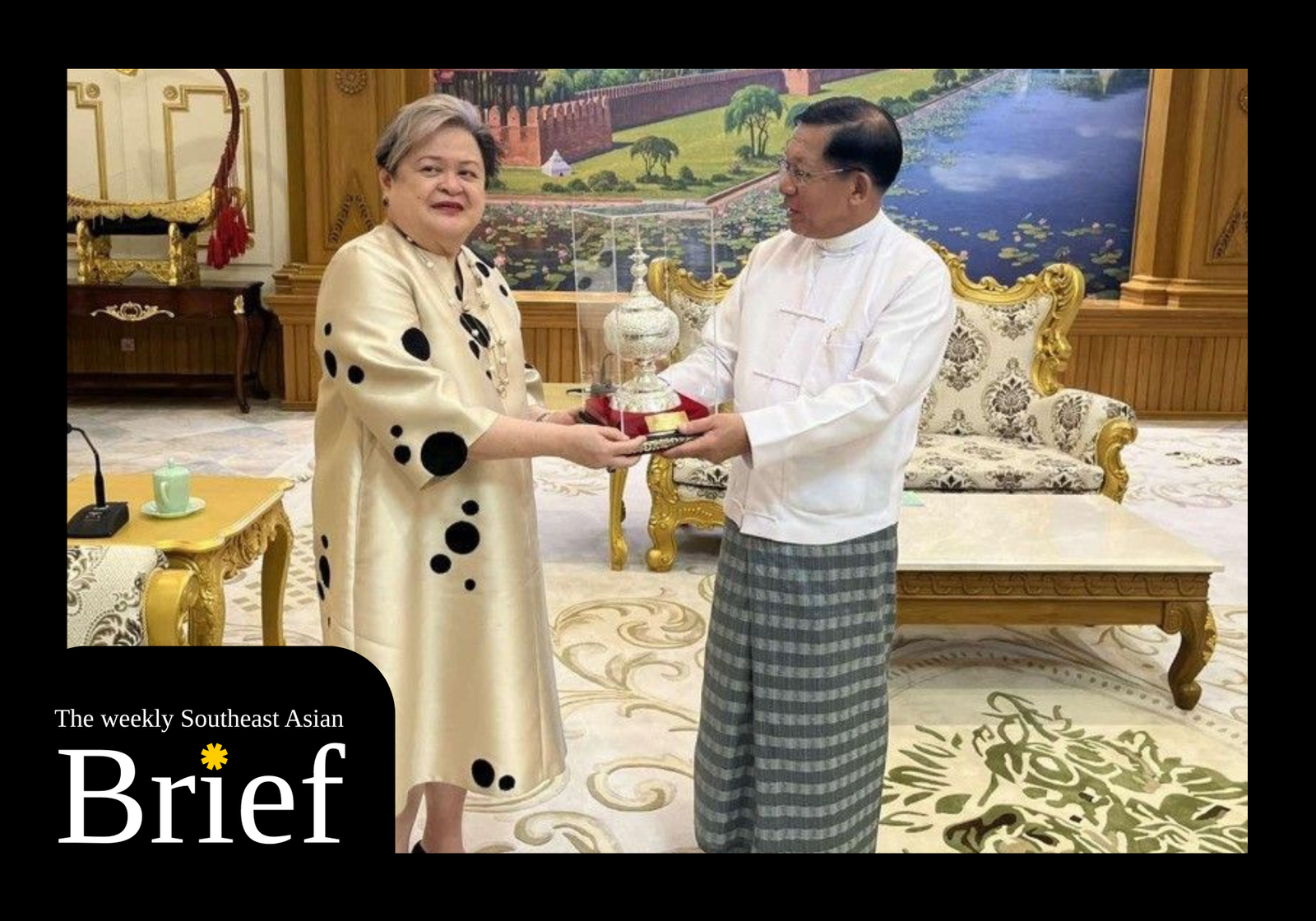
Chinese President Xi Jinping shaking hands with Thai Prime Minister Anutin Charnvirakul during the latter’s visit to Shanghai for the 2026 World AI Conference and High-Level Meeting on Global AI Governance in July 2026. (Chinese Ministry of Foreign Affairs)
On October 16, China’s embassy in Bangkok issued a travel alert urging Chinese citizens to take care in Thailand after a series of kidnappings and trafficking cases linked to fake job offers. On October 21, Foreign Minister Sihasak Phuangketkeow asked the embassy to keep its warnings proportionate to the actual situation and proposed talks between the Thai tourism ministry and the embassy to restore visitor confidence. The exchange comes three months after Prime Minister Anutin Charnvirakul’s five-day visit to China, after which the Thai government said it aims to complete the first section of the China-linked high-speed railway, from Bangkok to Nakhon Ratchasima, by 2030.
The episode touches tourism, one of the main channels through which China’s appeal in Thailand has grown, as more Thais travel to China. The alert concerns the opposite flow, Chinese visitors in Thailand. Japan is the other power competing for Thai goodwill, and it stands on different ground. The 2026 State of Southeast Asia survey by the ISEAS Yusof Ishak Institute ranks Japan as the region’s most trusted partner, while China is seen as the most influential economic and political-strategic power. Japan’s appeal rests more on culture and civil society, and China’s on travel, consumer brands and large projects.
Six years after his study of Chinese and Japanese influence in Thailand, Daniele Carminati, a lecturer in International Relations and Global Affairs at Mahidol University International College (MUIC), says his framework still holds, but the balance between the two is shifting.
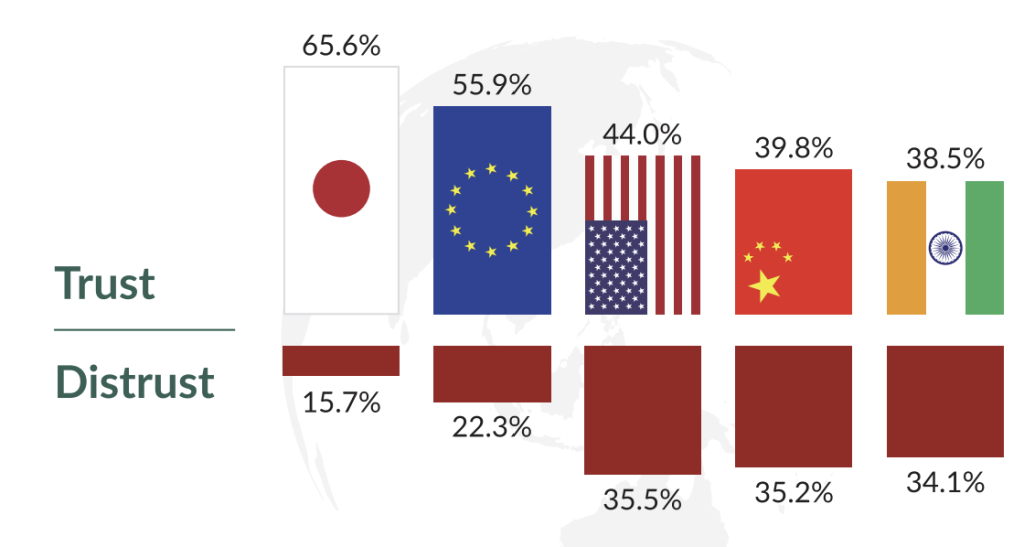
Based on ISEAS’ State of Southeast Asia Survey 2026, Japan remains Southeast Asia’s most trusted partner, with China only being fourth in the region. China is, however, considered the most influential economic and political-strategic power. (ISEAS)
Quiet Japan, Loud China
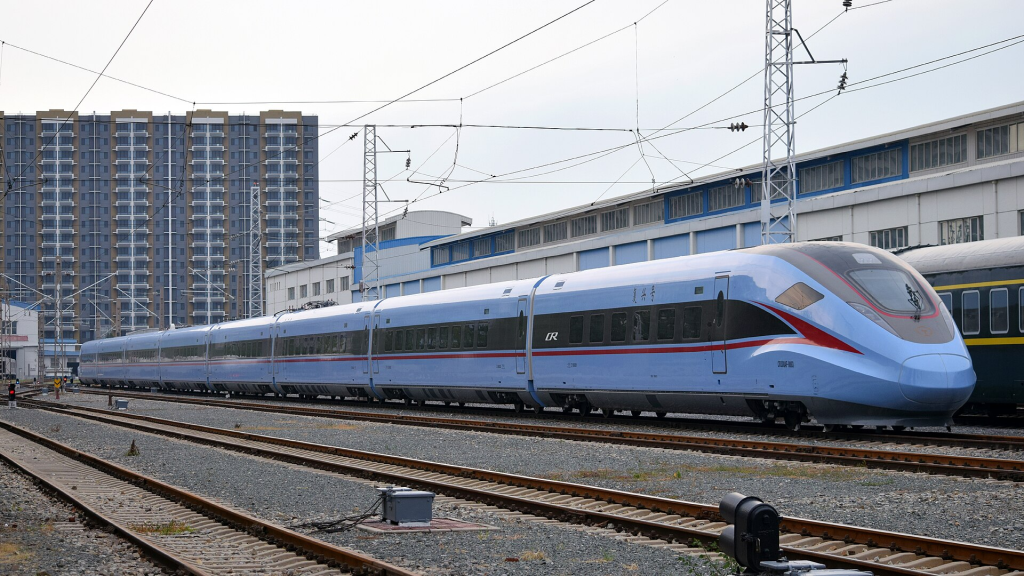
A Chinese-built Fuxing high-speed train. Carminati expects the long-delayed line in Thailand, the country’s first, to be a major reputational boost for China once it opens. (Wikimedia/Wei Kakurai)
The basic contrast has not changed, Carminati says. “Japan is more stealthy, while China is more outspoken.” What has changed is how far apart they are. China’s government, he says, is “a bit less” vocal than before, though it remains “much more open about sharing what they do.” Japan, under Prime Minister Sanae Takaichi, is a little more vocal, though he calls that a work in progress.
Both strategies have costs. China’s habit of announcing its achievements brings risk: “If you attract attention you attract criticism instead.” Japan, by contrast, does things well but gets little recognition for them. Its government-led “Cool Japan” campaign has been judged a failure by many in the literature, he says, yet Japan’s appeal is unaffected because it is “super organic,” meaning it comes from civil society, even without government push.
The biggest change from his 2020 conclusions is where China’s influence comes from. His earlier research described a state-driven strategy. Now, he says, much of the momentum looks organic. “I have to update it,” he says. Game developers and online influencers have jumped on the trend, and the government has taken a “wait and see” approach, stepping in only when needed.
Tourism is one example. When he surveyed Thai students in 2022, he did not expect China’s appeal to rise so fast. He now calls it “a major soft power boost.” He points to cost, easy flights, visa-free entry and payment apps like WeChat and Alipay. Travel in China, he says, is “pretty frictionless.” Chinese brands such as Xiaomi, Huawei and DJI are popular among the Thai populace, and Chinese restaurant chains are busy. He says China is becoming “cool” in Thai eyes.
Opinions are not uniform. Business people affected by cheap Chinese imports and overcapacity may have mixed feelings about China than the general public, he says, and many ordinary Thais work in tourism and benefit from it.
The clearest example, in his view, is the high-speed railway. “There’s never been a modern high speed rail in Thailand,” he notes. “[The country helping Thailand building it is] Not Japan, apparently. It’s going to be China.” Delays have been “eternal,” but he expects a large reputational payoff when it opens, similar to the effect in Laos, where visitors and locals alike are amazed by the Chinese-built line. Thailand, he adds, is largely financing the project itself, so he sees little risk of a “debt trap.” This differs from Indonesia, whose China-funded line was first billed as needing no state funds but now being restructured. He frames this as soft power and economic power merging, which he calls “soft economic power.”
Power, he says, is a spectrum: “No form of power exists 100% in isolation.” Soft power was once built on ideology and the promise of democracy. That is no longer the case, he argues, as the US has stepped back from promoting liberal values and even Japan has become more pragmatic. Today, tangible projects such as ports, railways and trade matter more than ideals.
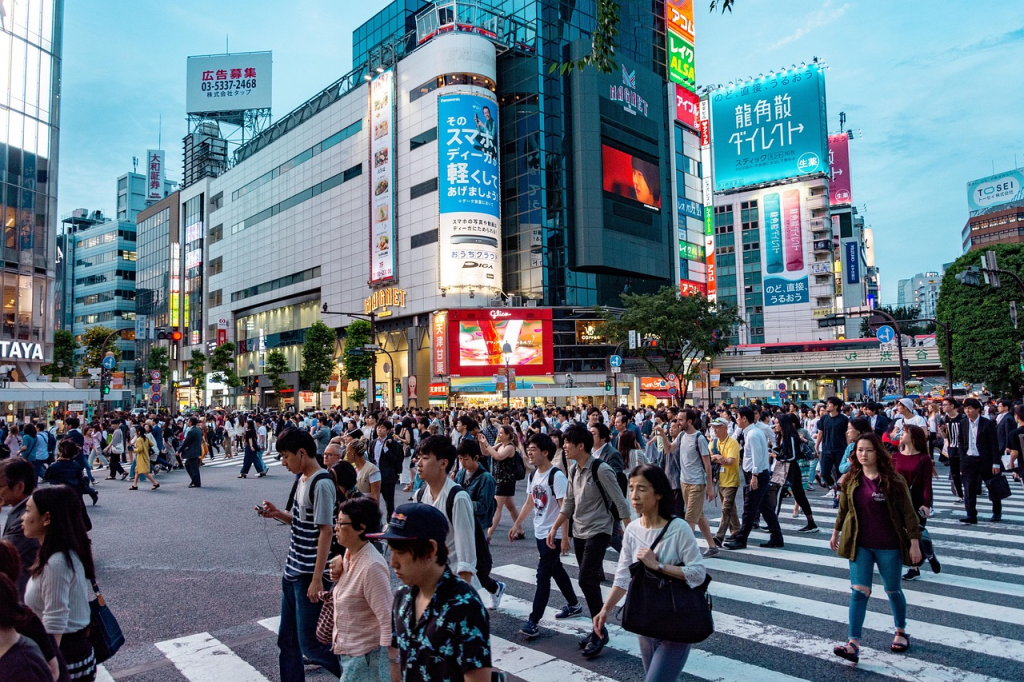
Japan’s appeal in Thailand still rests on culture, food and travel. Carminati says Thais are discovering a more sophisticated side of Japanese culture as the middle class grows. (Pixabay)
Carminati sees Japan leading on culture. As Thailand’s middle class grows richer, it is discovering more sophisticated Japanese culture and food, he says, “going beyond sushi and ramen”. Chinese cultural influence is also growing, although it has yet to achieve the same breadth of appeal.
Political values are the most contentious source, and fewer countries lean on them. In foreign policy, he calls Japan “good but stagnant” and says Southeast Asia would like it to be more proactive. He does not think Takaichi is doing as well as expected. China’s message to the region should be simple: reassure us that you are benevolent, with “more alignment between rhetoric and actions, words and actions.”
Thailand’s balancing act
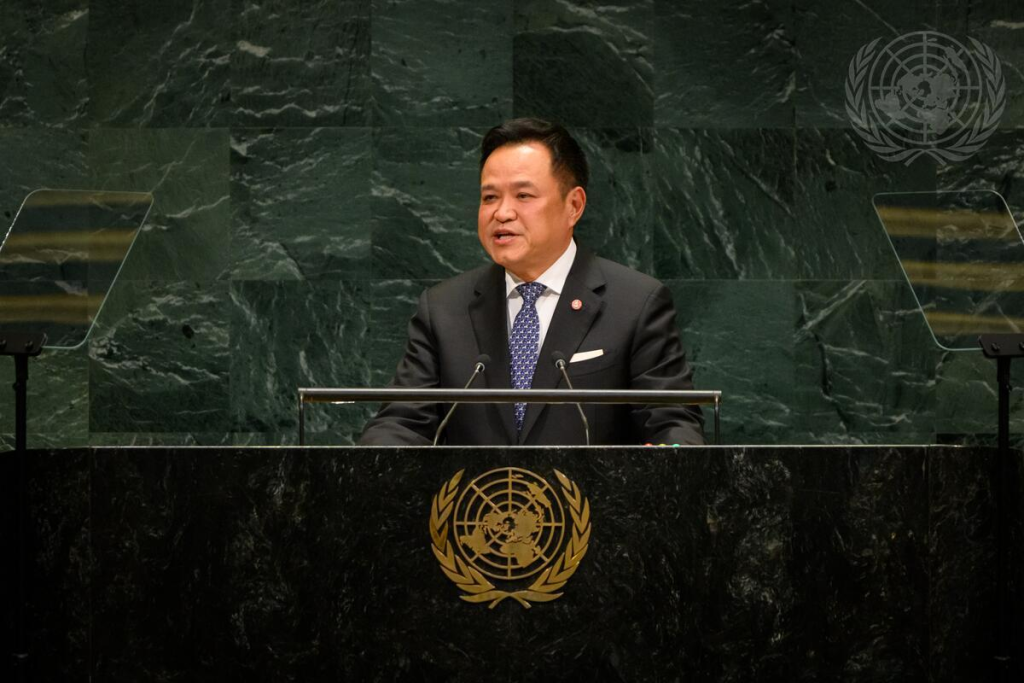
Thai Prime Minister Anutin Charnvirakul during his speech at the 81st UN General Assembly session in September 2026, where he emphasised the importance of multilateralism and the role of ASEAN in the region. (UN Photo)
Thailand’s public and its elites see China differently, he says, but he cautions that he has no inside access to the upper levels of Thai government. The public remains a “mixed bag” in China. Elites are “cautiously getting closer,” which he describes as “cautious engagement,” partly because the US is seen as less reliable.
Thailand will not openly challenge Washington, he thinks, but “in the background they are definitely opening up more to China.” The change from military junta to an elected government has altered little, he says. Thai elites are pragmatic and align with whichever power helps them keep their position and keep the country stable.
None of this, he says, means Thais trust China. “Do they trust China? Not necessarily.” But “China is next door,” he says. “You have to deal with China.” Opinion of China has improved, partly through its own actions and partly because of America’s. This leaves room for Japan, Europe and India, he says. He believes the European Union and India are stepping up their engagement, which he sees as good for Thailand’s diversification. He stresses that this is based on news coverage and meetings, not data.
Does Japan’s Cautious Approach Still Pay Off?

Daniele Carminati during one of his lectures. His closing slide asks whether the region is moving from “to choose or not to choose” to “how to mask a choice”. (Daniele Carminati)
The title of Daniele Carminati’s 2020 study, “Playing Safe or Taking Risks?”, is misleading until it is read, as he now acknowledges, because a reader might match the phrases to the countries in the wrong order. Japan is the one playing safe, and China the one taking risks. Carminati’s later work on the Philippines, “Soft Pull versus Hard Landing,” makes a similar comparison. In it, he says, Japan’s cautious approach has worked, while China has had a harder time, at least in the Philippines.
Across the rest of Southeast Asia, he says, China is doing quite well. He declines to comment on the military and strategic side of the rivalry, which he says is beyond his expertise.
Two markers will show which way the balance moves. The first is the railway. The Thai government has said it plans to open bidding in December for a second phase to Nong Khai on the Lao border, which would link the Thai line to the China-Laos railway. The second is whether Japan’s culture-led appeal keeps its lead as Tokyo becomes more vocal, which Carminati describes as a work in progress under Prime Minister Sanae Takaichi. The next edition of the annual State of Southeast Asia survey by the ISEAS Yusof Ishak Institute, due in 2027, will give the next regional reading of how trust and influence have moved for both powers.
On this evidence, China’s gains in Thailand now rest on tourism, consumer brands and visible projects, while Japan’s rest on accumulated goodwill. Neither guarantees trust and Thai elites are pragmatic, aligning with whichever power helps keep the country stable. The next stage of the contest will depend on which partner’s engagement stays credible as Bangkok keeps its options open.
About The Author