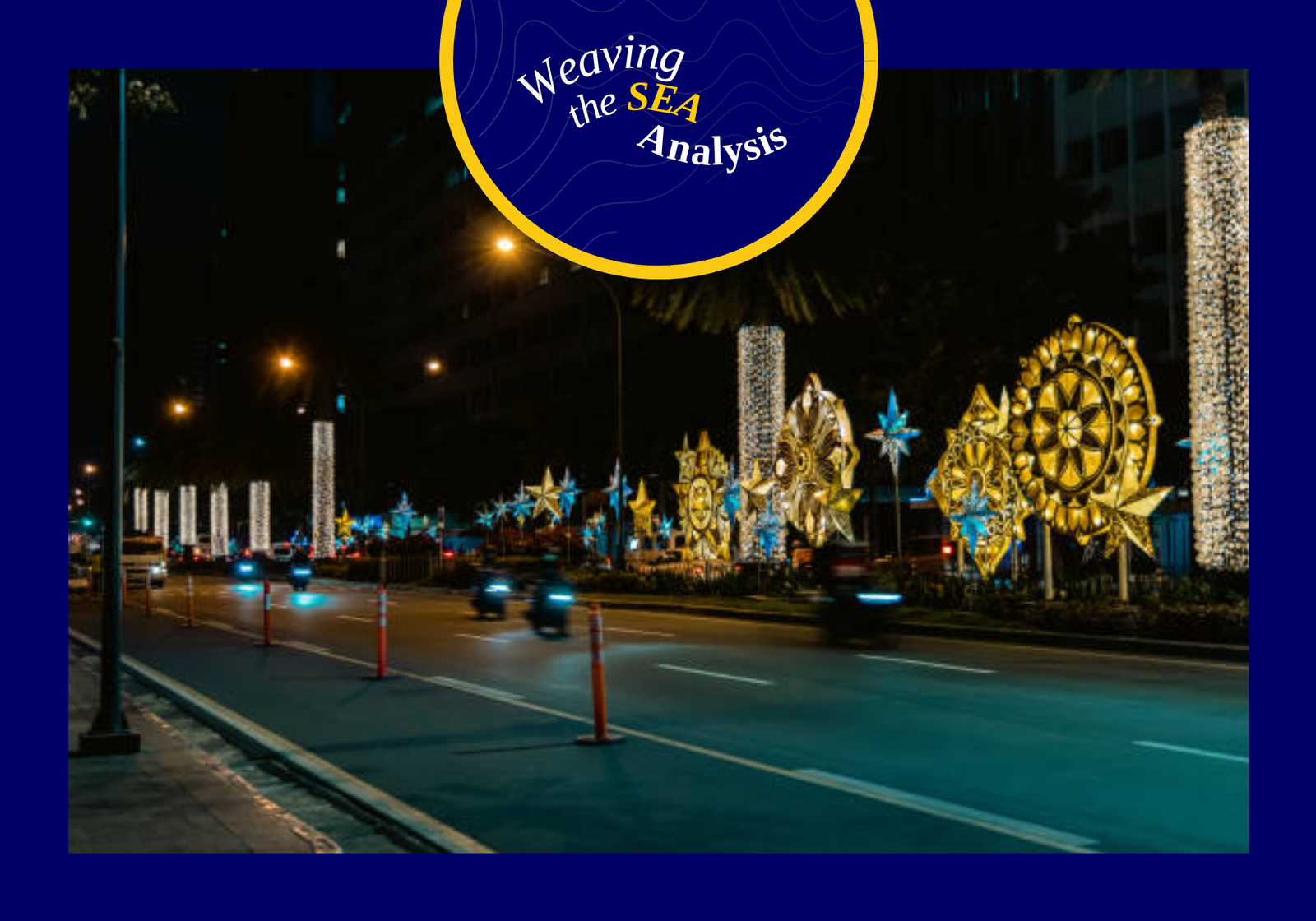
A city in Metro Manila adorned with bright Christmas lights and lanterns. (Unsplash/Bugking88)
This is a top 10 entry in the Weaving the SEA Essay Competition 2026, written by Margaux Ysabel Remolador. Her essay traces the Filipino Christmas tradition of Noche Buena, reading bayanihan, communal unity, in the shared feast, the karaoke and the games that bring families and friends to one table.
It’s the time of the year where establishments and households in the Philippines put up Christmas trees. As early as September, some families prepare right away for the season. Vibrant lights brighten, lanterns create a spotlight and Christmas songs echo through the walls. Different traditions arise then and there. When December comes, the Christmas season brings families and friends together in one house and one feast. How does reimagining Christmas in the Philippines unveil bayanihan through the tradition of Noche Buena?
Noche Buena in the Philippines
Noche Buena or the Christmas Eve feast is a tradition in the Philippines. Every morning of December 24, elders, with the help of their children and the rest of the family, start cooking and preparing food, including desserts. Filipinos typically eat three times a day: breakfast, lunch and dinner. At some point, some Filipinos include merienda or afternoon tea in their meals. During Christmas, feasting at midnight is the most important for Filipinos. That makes four meals per day, if merienda is included and a total of five meals every Christmas Eve.
Tracing down the Philippines’ historical roots, Noche Buena was introduced during the Spanish colonial period where Filipinos adapted hospitality and Christian traditions. Social gatherings, meanwhile, is a tradition adapted from indigenous Filipino custom. Sharing food during gatherings highlight Filipino hospitality and generosity. However, a celebration like Noche Buena, is not centred on religion, as even family members of different beliefs also practice this tradition. Like in other Southeast Asian countries, similar colonial legacies shape festive food traditions.
The country has staple foods that make up people’s daily lives. Examples of staple foods include white rice, adobo or meat marinade, and sinigang or tamarind-based soup. Filipino foods are the centre of the festivity, highlighting local spirit and culture. Every Christmas season, the staple foods are added with a variety of dishes.
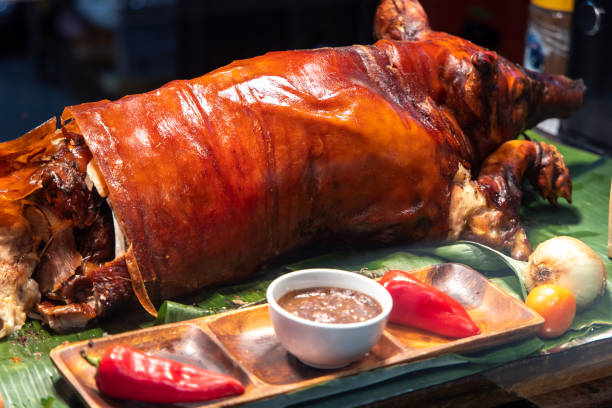
Lechon served on a large banana leaf with savory fish sauce and chili on the side. (Bugking88)
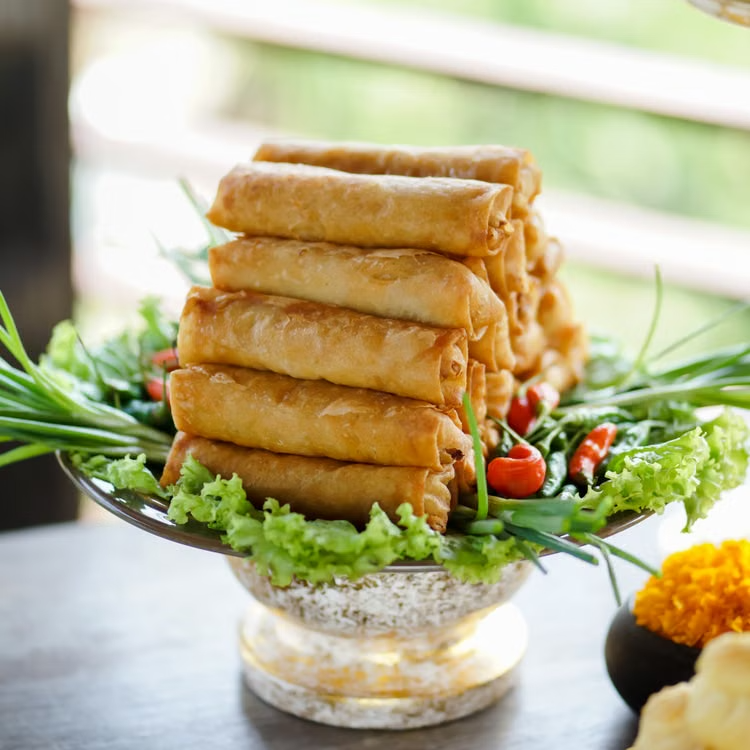
Lumpiang Shanghai served on a plate on every occasion. (Unsplash/Tamba Budiarsana)
For the main dishes: lechon or roast pig, spaghetti with Filipino-style sweet sauce, ham, hot dogs, pancit or traditional noodle dish, lumpiang shanghai or fried meat and vegetable spring roll.
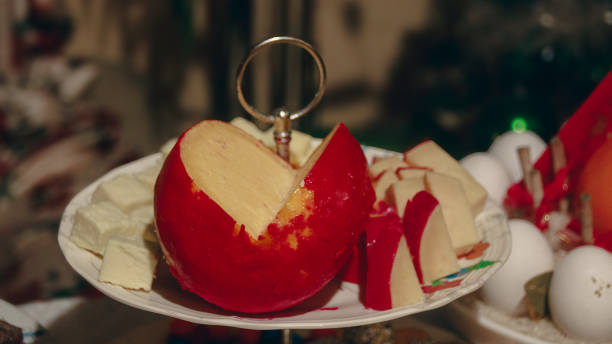
Queso de bola served on a plate where the red skin is only wax and not edible. (Unsplash/Marie Martin)
The side or starters: queso de bola or ball of cheese.
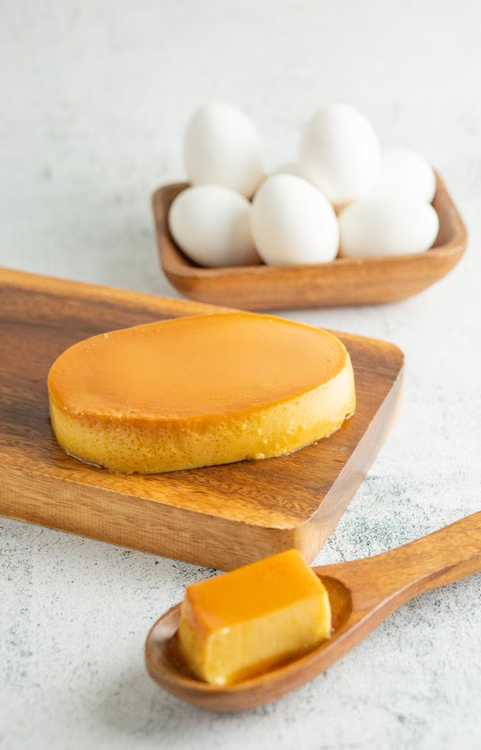
Leche flan is only made of egg, sugar, and evaporated milk. (Unsplash/Mar Larracas)
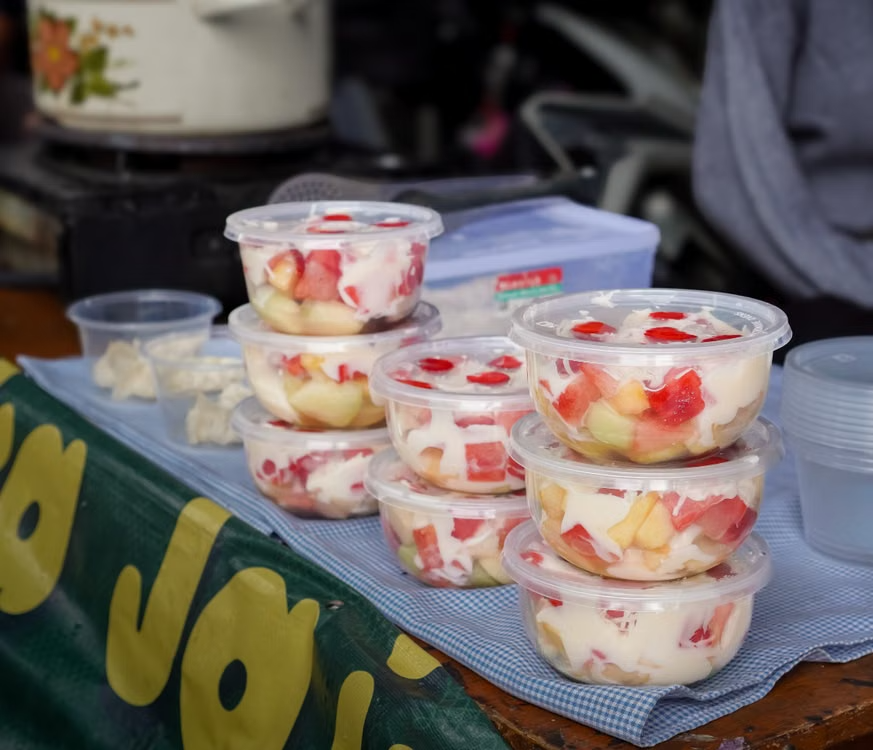
The usual Filipino fruit salad with different kinds of round fruits, cream and condensed milk. (Unsplash/Firman Marek)
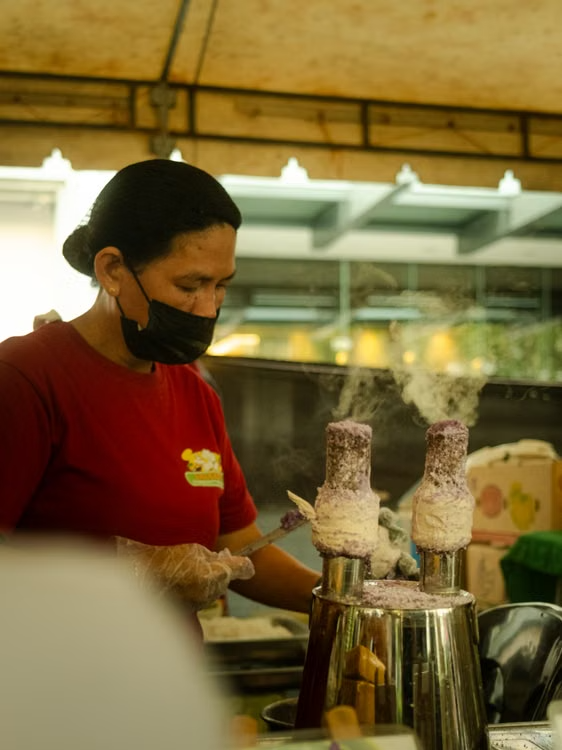
A vendor steaming puto bumbong in a tube for it to be cooked. (Unsplash/Elizabeth Celestino)
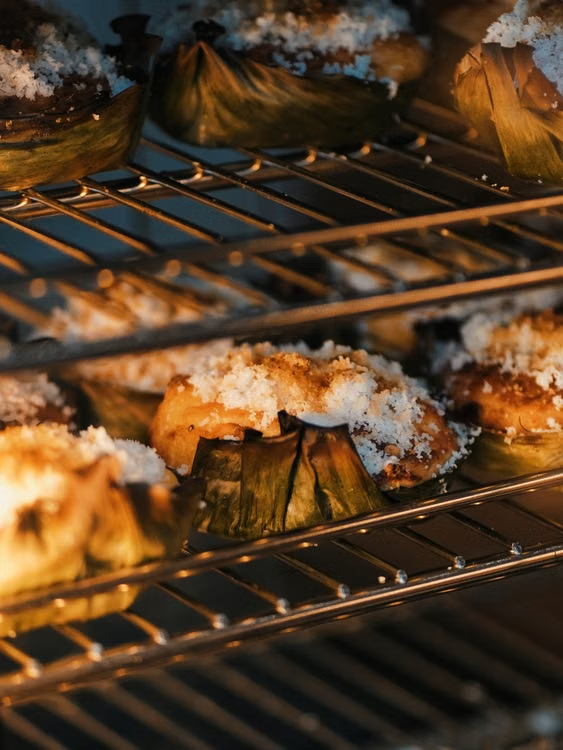
Bibingka in banana leaves topped with coconut shavings baked inside the oven. (Unsplash/Mico Medel)
For desserts: leche flan or crème caramel, fruit salad, mango graham cake, puto bumbong or steamed purple rice cake cooked in a bamboo tube and bibingka or baked rice cake with salted egg and cheese.
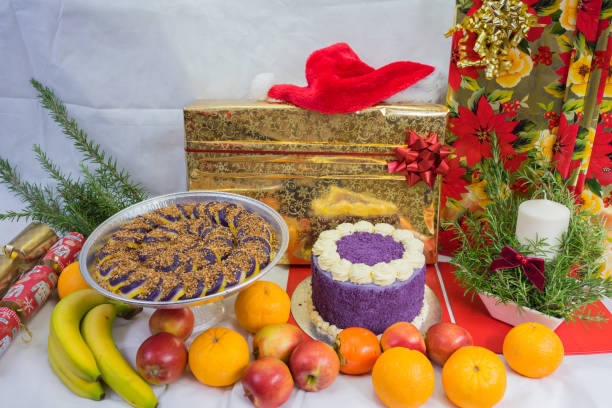
Circle foods that symbolise luck and prosperity spread in a Filipino table. (iStock Photo/Tonyliz)
Some also add different kinds of kakanin or rice cakes because it symbolises togetherness due to its stickiness. It is a generous spread, yet each and every dish fills the Filipino table.
While lechon is one of the grand dishes of every Noche Buena, it is cooked in a time-consuming process. With that, lechon is usually pre-ordered from trusted roasted food stalls or restaurants in their neighbourhood. For kakanin desserts, some of which can be difficult to make. Puto bumbong and bibingka are usually made fresh and available in stalls beside churches and on the sidewalks. After attending night mass, people directly go to the stalls to buy from kakanin vendors.
The Origins of Bayanihan
Noche Buena unveils the Philippines’ value for bayanihan or communal unity and cooperation. Bayanihan is rooted from the words bayani or hero and bayan or community. In Philippine art and history, bayanihan is traced back from the rural tradition of community members lifting and carrying a bahay kubo or nipa hut (a mangrove palm). A bahay kubo is a traditional house made from nipa palm, bamboo, and anahaw or fan palm leaves. In 1959, Fernando Amorsolo—Filipino painter and National Artist of the Philippines—reflected on the Filipino bayanihan and expressed his vision through his oil painting with the same title.
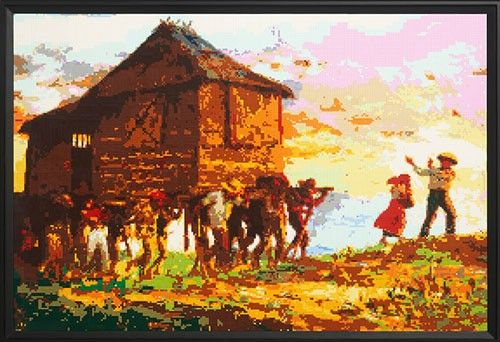
“Bayanihan” by Filipino painter and National Artist Fernando Amorsolo, 1959. (Fernando C. Amorsolo Art Foundation, Inc.)
In today’s generation, from the kitchen to the table, bayanihan is reflected upon Noche Buena. When families have a feast and activities prepared, they invite relatives and friends over to celebrate with them. Eventually, families celebrate at home, out of town or out of the country. Some, if in large groups, reserve a place in a community hall to accommodate every individual. Bayanihan is emphasised through the generous actions shown by host families. Therefore, Noche Buena is not just a midnight feast to fill one’s stomach. It is a collective action where everyone’s goal is to bring people together in one table and share blessings with one another.
Reimagining Christmas
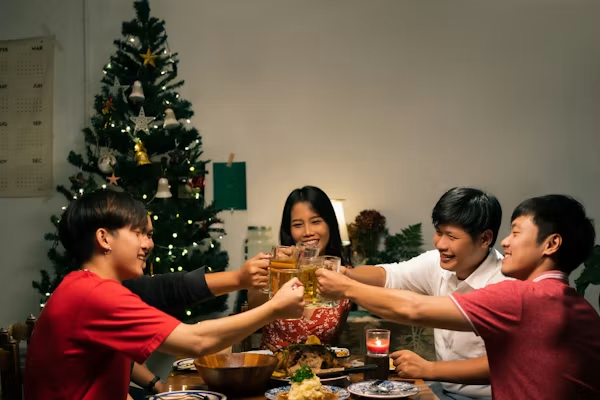
Group of friends clinking glasses during Christmas feast. (Unsplash/Getty Images)
Food and festivals are drivers of cultural assimilation and continuity. Occasions like Christmas bind families together through a salo-salo or communal and social gathering.
As the star Christmas topper shines above the Christmas tree, people become one while the feast is being shared. Noche Buena embodies the tradition of bayanihan where beliefs, companionship, faith and food merge and sync at once to remind Filipinos that Christmas is both celebrated and reflected upon.
From the saltiness of queso de bola to the native, sweet flavour of bibingka, the feast on a Filipino Christmas also highlights the story of adaptation and warmth. Additionally, bayanihan will give people its true meaning. Its true meaning is carried forth in every dish shared at the table.
On the day of Christmas, the celebration is never complete without preparing for parlor games and karaoke. After Noche Buena, families and friends gather at the living room to dance, play and sing. Parlor games refer to indoor plays with the use of limited equipment. Some parlor games played by Filipinos on any kind of occasions include money toss, spoon relay, musical chairs, charades and Pinoy Henyo or a guessing game where one player guesses the word placed on their forehead and their partner answers “yes”, “no” or “maybe”.
While not all Filipinos are singers, some try their best to belt out their best voices. There are households that do karaoke on Christmas, an activity where families fill the room and sing songs that embody happiness, prosperity, liveliness, and hope. In a fun global ranking by TheTopTens, which compiles over 220,000 top ten lists across countless categories, the Philippines has emerged as the number 2 country in the world with the best singers.
A few of the famous songs sung by locals every season are “All I Want For Christmas Is You” by Mariah Carey and “Christmas in Our Hearts” by Jose Mari Chan. Part of this season also includes caroling. Children often visit streets and sing in front of houses to perform songs like “Ang Pasko ay Sumapit”, “Star ng Pasko” and “Namamasko (Sa Maybahay Ang Aming Bati)”.
If none of the said activities—singing, caroling, playing games—is on the agenda, families and friends proceed to exchanging gifts. For some Filipinos, they believe that the price of a present does not matter. Because the true value lies in its effort, thought and its significance and relation to the one who gave it. Even if hours pass by swiftly, Filipinos keep the Christmas spirit alive until the end of December and beginning of a new year.
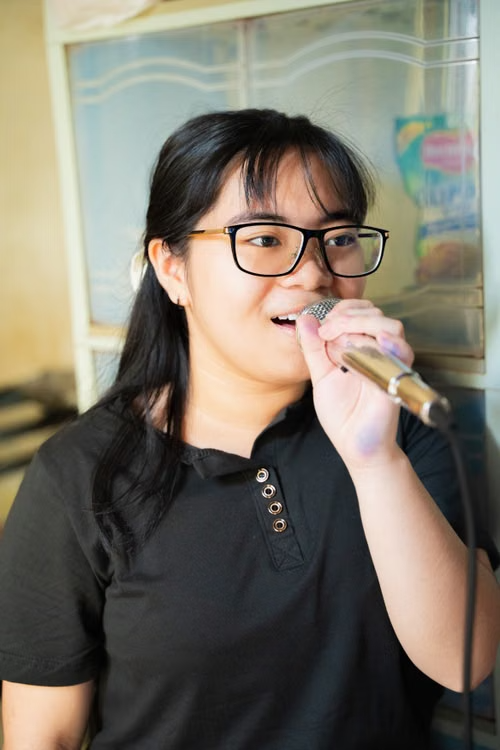
A young Filipina showcasing her singing talent outdoors. (Pexels/Kenneth Surillo)
The idea of bayanihan is not only fixed on having a feast from afternoon to midnight. Bayanihan circles around the thought and initiative of groups of people who gather in a comfortable space. It is also a form of communication, as people share blessings and thoughts. But, despite having different ideas, people unite and rekindle moments in their lives and shared experiences.
About The Author